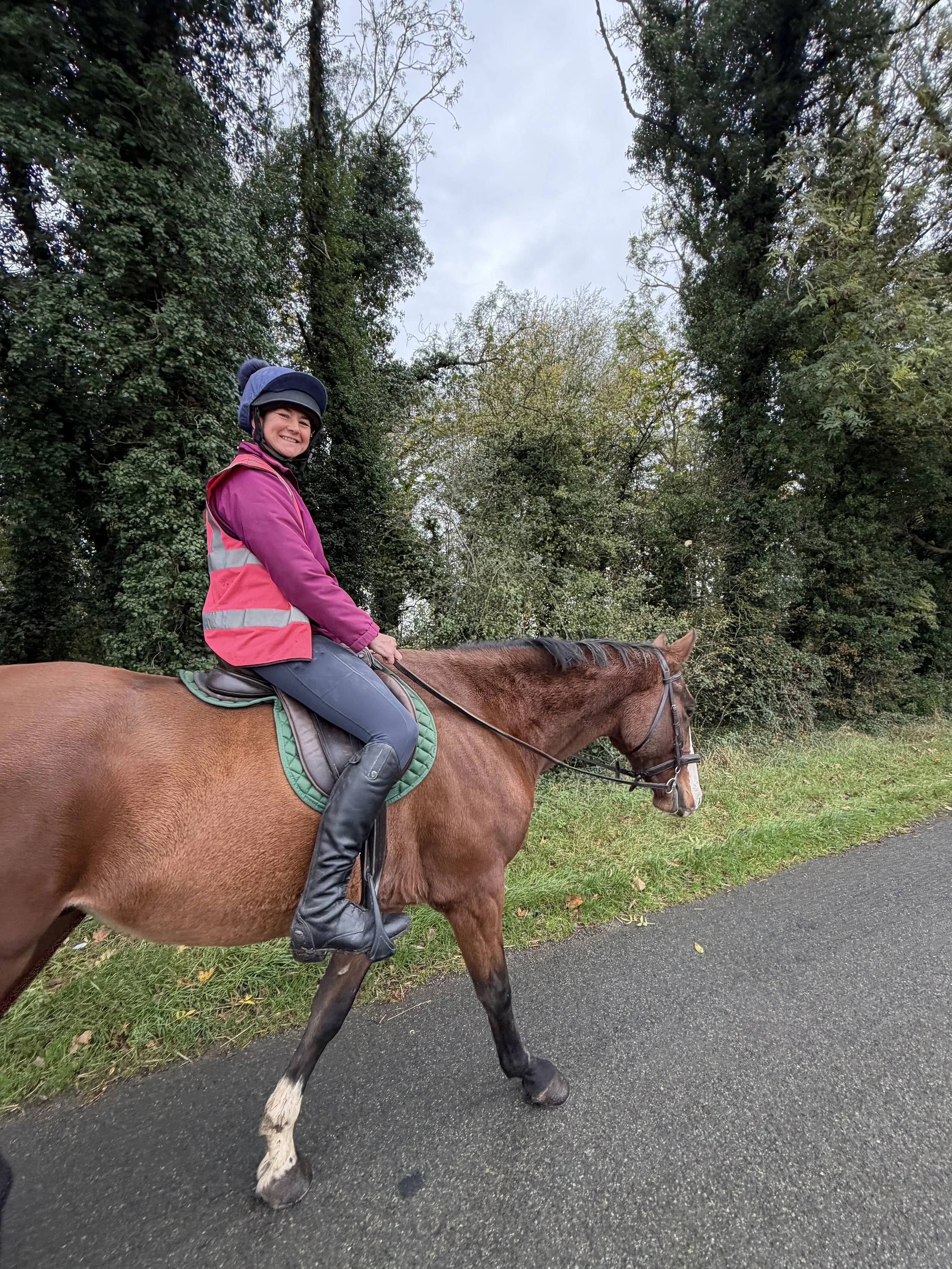
One of the easiest traps to fall into in equestrianism is becoming so focused on what we want to achieve that we forget to enjoy what we're doing.
We're constantly working towards something. Whether that's moving up a level, achieving a particular percentage, qualifying for a championship or competing internationally, there's always another goal on the horizon.
Don't get me wrong, I think ambition is a good thing. I'm incredibly ambitious myself, both for my own riding and for the horses I breed and produce. I don't think there's anything wrong with wanting to achieve as much as you possibly can, but I do think there's a point where our determination to reach the next milestone can start to take away from the enjoyment of getting there.
When will you be happy with where you are?
How often do we tell ourselves that we'll be happy when we've achieved something?
I'll be happy when I'm competing at Elementary. I'll be happy when my horse can do flying changes. I'll be happy when I qualify for the championships.
The problem is that when we finally achieve those things, we often don't spend very long appreciating them before we start thinking about what's next.
Something we've spent months, sometimes years, working towards suddenly becomes something we take for granted. The goalpost becomes the start line, and before we've really appreciated what we've achieved, we're already working towards something else.
If our enjoyment is always dependent on achieving the next goal, when do we actually get to enjoy what we're doing now?
Progress isn't always obvious
I think this is particularly relevant when we're training horses, especially young horses.
We tend to measure progress by what a horse can do that it couldn't do before, and all too often, we use competitive results as our measure of success. Yet so much of what makes a good horse isn't particularly exciting to watch, and it certainly isn't something we're likely to receive a rosette for.
It's the young horse that's a little more confident in an unfamiliar situation. The horse that's beginning to understand how to balance itself without relying on the rider. The one that previously became tense when something was difficult but is now willing to have a go.
These things might seem insignificant when we're looking at the bigger picture, but they're the foundations that everything else is built upon.
Unfortunately for our egos, and the instant gratification we've become so accustomed to, these things take time.
Not only that, it takes a genuinely observant rider to notice these finer details of improvement. They don't hit you in the face like a freight train. They appear almost silently, without fuss, without a round of applause. Unless we're paying attention, they can easily go unnoticed.
It's often only when we look back over several months that we realise just how much has changed. Things we once found difficult have become ordinary, and because they now feel easy, we forget to recognise them as achievements.
Learning to trust the process
When progress is this subtle, it's incredibly easy to convince ourselves that it isn't happening.
It is difficult to trust the process, particularly when progress doesn't seem to be happening as quickly as we'd like.
Our instinct can then be to try harder, do more or find a quicker way to get the result we want. Often, what we actually need is to give ourselves and our horses more time. Enough time for what we're learning to become so well established that it starts to feel automatic.
It's only when one stage of learning is secure that the door to the next one is properly open. Before that, we might be able to open it just far enough to see what's on the other side, but that doesn't necessarily mean we're ready to walk through it.
Just because a horse can perform a movement occasionally doesn't mean it has developed the understanding, strength or balance to perform it consistently. Equally, a rider might achieve something in a lesson without yet having the confidence or understanding to reproduce it independently.
Sometimes this means spending a month of lessons working on what appears to be the same thing.
It's understandable that riders might start questioning whether they're good enough, or even whether they're wasting money covering the same ground. But repetition doesn't necessarily mean a lack of progress. The exercise might look the same, while the rider's balance, coordination, confidence and awareness are gradually improving.
We all accept that learning a skill takes practice and repetition, but how many of us are genuinely happy to apply that principle to our own riding and the training of our horses?
I think this is where coaching becomes particularly important. I want my students to understand why we're working on something, not just what we're trying to achieve. If we're repeating an exercise over several weeks, I want them to recognise what is changing and why that work is worthwhile.
As a trainer, I want my horses to barely realise they're learning. I want each new question to build on something they already understand, so that the journey feels easy and enjoyable rather than like a constant struggle to meet the next expectation.
If the only measure of success is whether you've achieved your ultimate goal, an awful lot of genuinely good training is going to feel like failure. That frustration can soon translate into tension and pressure for both horse and rider, taking away the enjoyment that should be part of the process.
You can be ambitious and still enjoy where you are
I don't think enjoying the journey means becoming less ambitious, lowering your standards or giving up on what you want to achieve. I actually think the opposite can be true.
If we can find genuine satisfaction in the day-to-day process of developing ourselves and our horses, we're probably going to be far more willing to put in the consistent work required to achieve our ambitions.
We're also more likely to make decisions based on what is right for the horse, rather than what gets us to the next milestone fastest.
I still want to produce horses to the highest level I possibly can. I still have ambitions for my own riding, and I don't expect that to change.
But I also recognise that if I spend every day thinking only about where I want to be in five or ten years' time, I'm going to miss an awful lot of what makes having horses so rewarding in the first place.
The first time a young horse confidently does something it previously found difficult. The moment a rider suddenly understands something they've been struggling with for months. The feeling when a horse starts to trust you enough to try, even when it doesn't quite understand the question.
Those moments matter just as much as the bigger achievements.
Most of us didn't start riding because we wanted to achieve a particular percentage or win a specific competition. We started because we loved horses.
Of course, our ambitions develop as we gain experience, and there's nothing wrong with that. But I think it's worth reminding ourselves occasionally that our goals are supposed to add to our enjoyment, not become the only reason we do it.
By all means, set yourself big goals. Work hard, be ambitious and push yourself to become a better rider.
But don't become so focused on the horse and rider you want to become that you forget to appreciate the horse and rider you are today. After all, there's little point achieving everything you set out to do if you've forgotten how to enjoy it along the way.
C x